
 Search Engines Industry
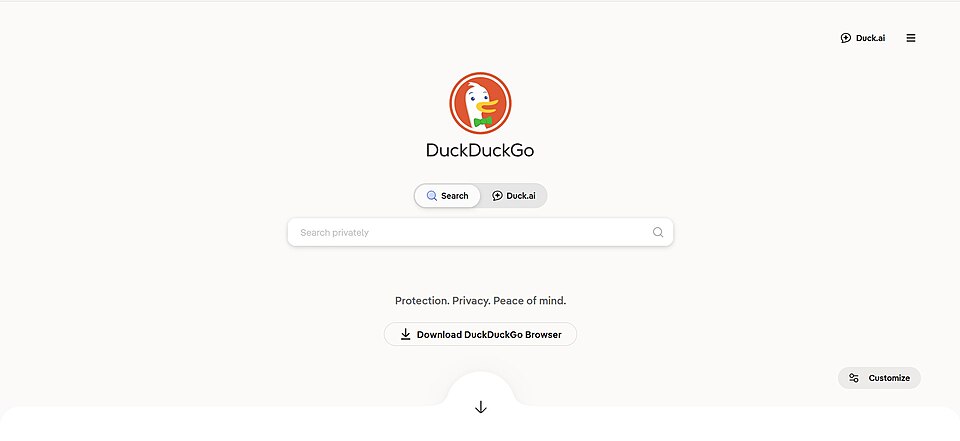
DuckDuckGo (duckduckgo.com) is the undisputed champion of the privacy-first internet movement. As public awareness regarding data harvesting and corporate surveillance has skyrocketed, DuckDuckGo has emerged as the premier alternative to traditional search engines. Its entire business model is built on a single, uncompromising promise: the platform does not collect, store, or share any personal information, search history, or IP addresses of its users.
The company was founded in February 2008 by Gabriel Weinberg in Paoli, Pennsylvania. Weinberg initially self-funded the project, seeking to create a search engine that generated high-quality results without the creeping feeling of being tracked across the web. The whimsical name 'DuckDuckGo' was derived from the classic children's game 'Duck, Duck, Goose.' After the 2013 Edward Snowden NSA surveillance leaks, DuckDuckGo experienced a massive, unprecedented surge in global traffic as millions of users sought safe haven from government and corporate monitoring.
DuckDuckGo has expanded from a simple website into a comprehensive suite of privacy tools:
Currently valued at roughly $1 Billion, DuckDuckGo proves that you can run a highly profitable search engine without exploiting user data. It generates revenue entirely through non-targeted, contextual advertising. If a user searches for 'car insurance,' DuckDuckGo shows an ad for car insurance based purely on that specific keyword, not on a hidden profile of the user's past browsing history. It also earns revenue through anonymous affiliate partnerships with eBay and Amazon.
Serving over 800 Million visits per month, DuckDuckGo is incredibly popular in Western countries with strong privacy-advocacy cultures. The United States accounts for roughly 48% of its traffic, with the United Kingdom, Germany, and Canada making up the next largest segments.
 Chief Executive Officer
 Total Employees
 Today's Trivia
 Traffic Heatmap — Top Countries
